What Does Tuscany Taste Like?
Tuscany tastes like olive trees in the heat. Like wild rosemary crushed underfoot and sea salt on your lips after a swim. It’s loud in flavour, quiet in presentation. The kind of place where lunch is just bread, tomatoes, and oil—but somehow, that’s enough.
Actually, it’s more than enough. It’s unforgettable.
Tuscan food isn’t fancy. It’s honest. It comes from cucina povera—a tradition of making the most out of what’s local, seasonal, and simple. It’s beans, tomatoes, unsalted bread, seafood, and olive oil that could pass for a perfume. Nothing wasted, nothing dressed up. Just food with backbone.
The Road Trip That Started It All
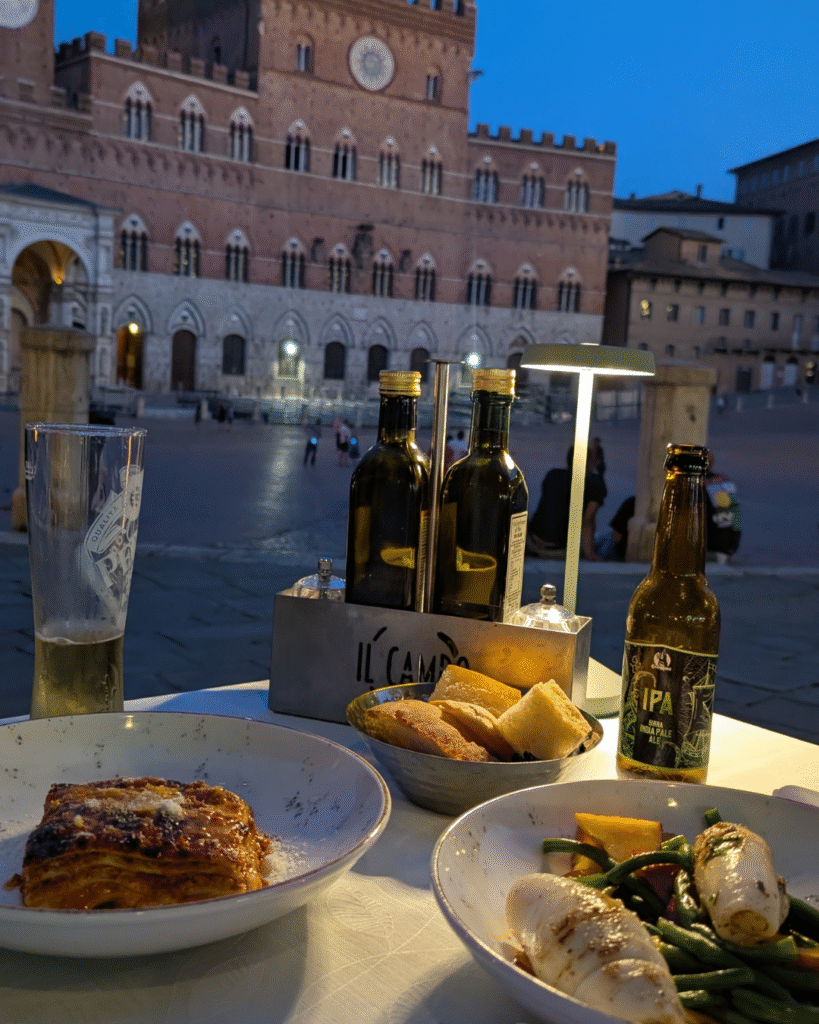
This summer, my fiancée and I packed a tiny Skoda, hit the Tuscan roads, and set out to find our wedding villa. Spoiler: we also found some of the best food of our lives.
We drove through vineyards, olive groves, and sand-slick roads that barely counted as roads. Livorno, Peccioli, Lucca, Florence, San Gimignano, Siena, Montepulciano, Cortona, Porto Santo Stefano, Pisa.
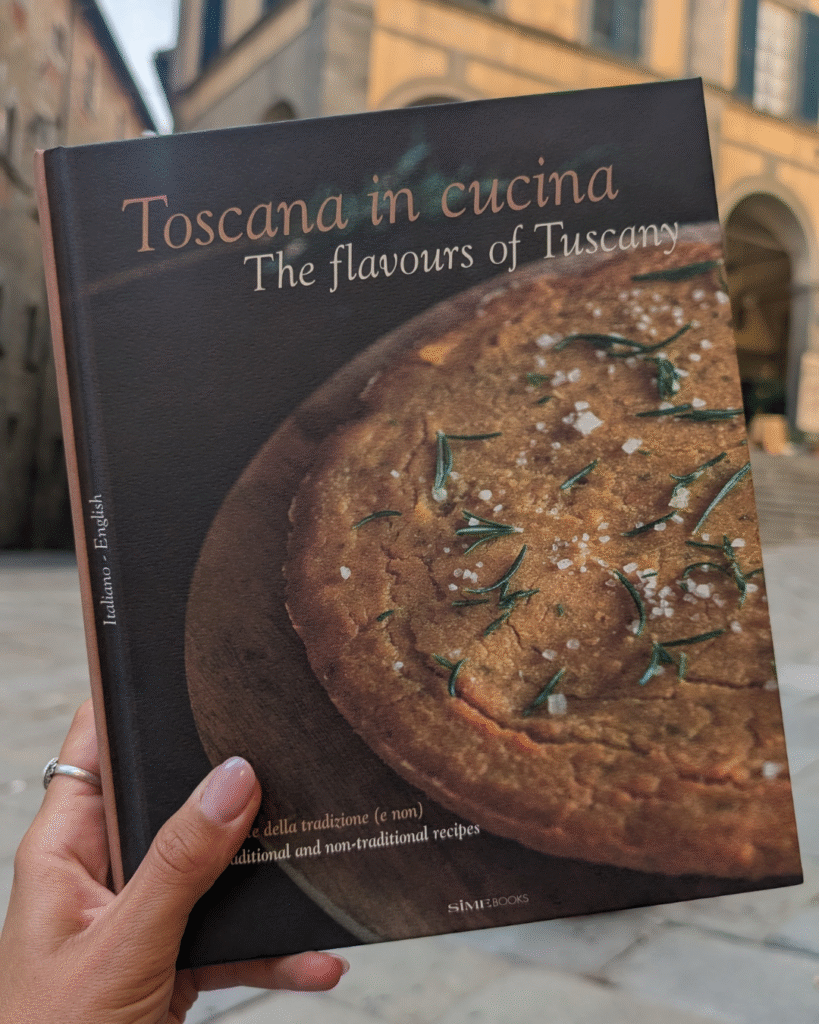
It wasn’t just a road trip. It was a crash course in flavour. Every stop had a new standout. By the time we flew home, I had olive oil in my luggage and a cookbook—Toscana in Cucina—that’s already stained with sauce splashes. This story? It started there.
Dishes That Defined the Trip
Not meals—moments. These are the ones that stuck.
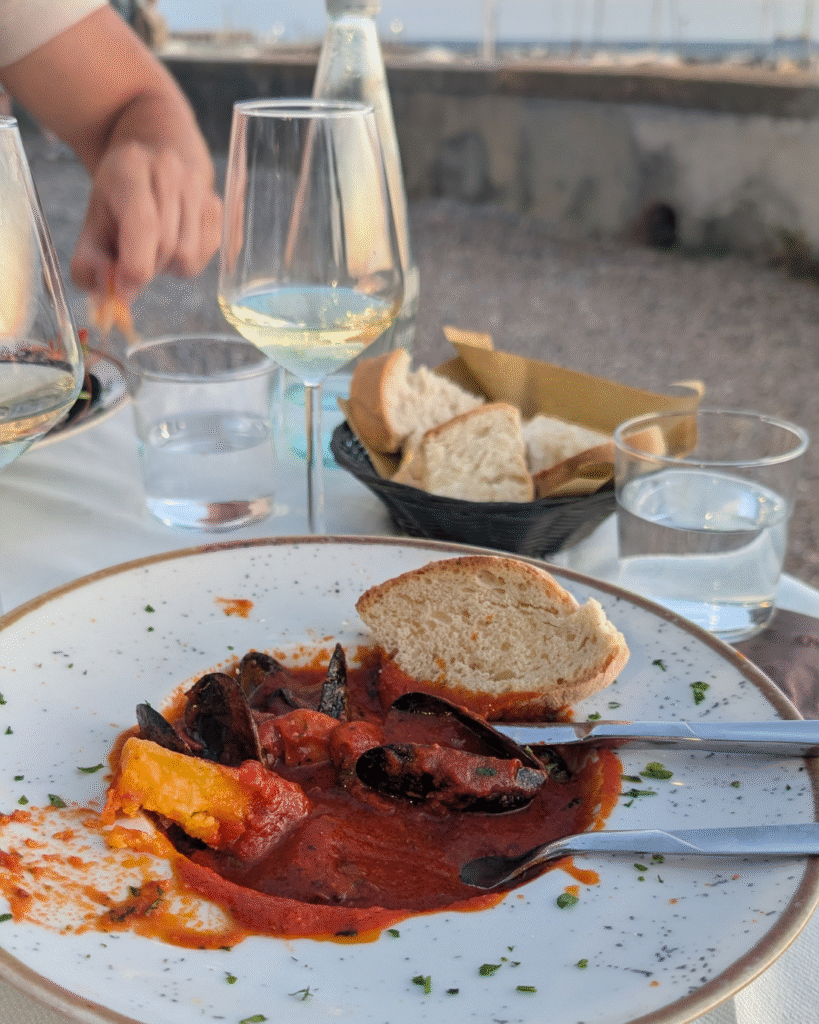
Cacciucco alla Livornese
First night in Livorno. Aperol in hand. Harbour breeze. We hunted for food past 7 p.m.—which, in Italy, is basically pre-dinner. Found La Vongola Ubriaca and lucked into the real deal.
Cacciucco is Tuscan fish stew at its finest. A thick, garlicky tomato broth with just enough heat, piled with octopus, squid, and chunks of fish. The kicker? Crusty bread at the bottom, soaking it all up. Messy, hearty, unforgettable.
This dish comes from necessity. Leftover fish turned into something bigger. The name nods to the five types of seafood it traditionally includes—one for every “C.” It’s still local, still made with pride, and still a damn good reason to visit Livorno.
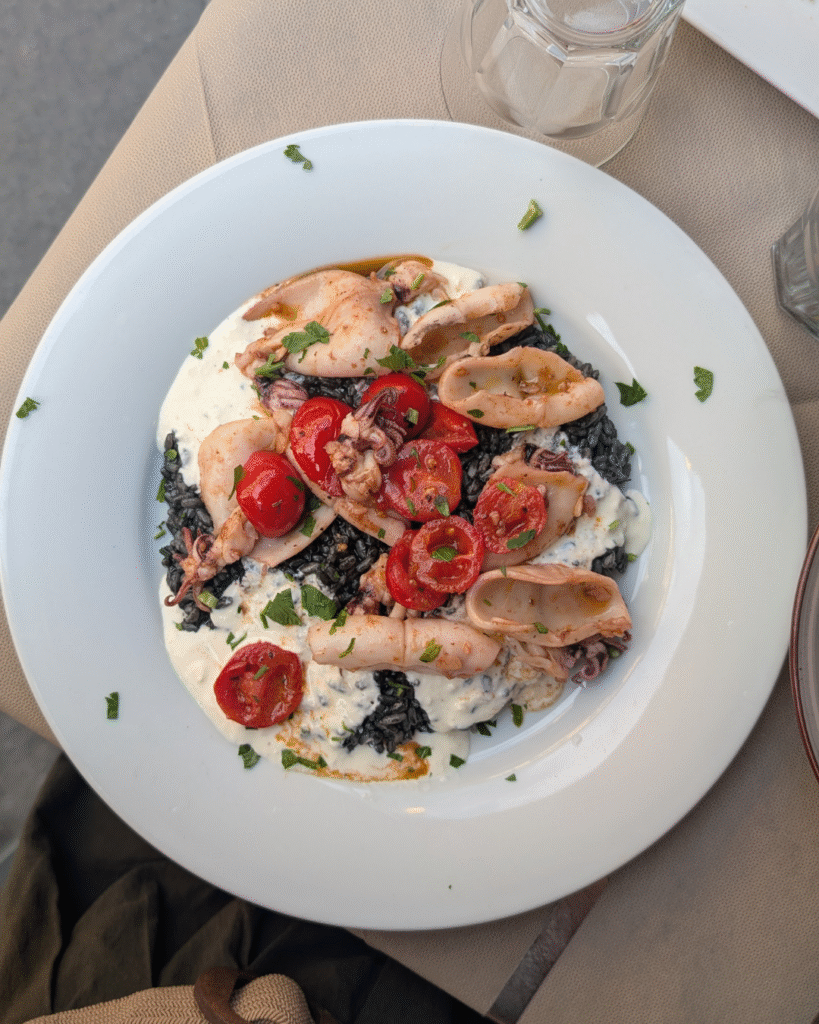
Risotto al Nero di Seppia
Black as ink, moody as hell, and absolutely addictive. We found this cuttlefish ink risotto at Il Peperoncino in Pisa. It looked like a risk. It tasted like velvet.
Each bite is rich with umami and sea salt, the rice perfectly al dente, the ink earthy and briny without being fishy. Burrata on top sealed the deal. This dish was originally Venetian, but it’s everywhere now—and if you love seafood, you need to try it.
Tonno alla Livornese
We didn’t find the classic version, but the one at Il Peperoncino hit anyway. Thick tuna steak, still juicy inside, topped with sweet sautéed onions and mashed beetroot. Around us? Locals drinking wine and debating politics at full volume.
The traditional version is tuna simmered in a tomato sauce with olives and capers. Sharp, salty, rich. It comes from Livorno, like a lot of smart seafood dishes that don’t pretend to be anything they’re not. This one’s protein-packed, no-nonsense, and full of heart.
Frittura di Pesce
One paper box. One perfect beach lunch.
On the sandy beach in Giannella, we spend a day at the organised beach by Il Tramonto and grabbed a mixed seafood fry to-go. Tiny calamari, anchovies, prawns—all lightly floured, fried golden, and ready to devour. Just a squeeze of lemon, and you’re good.
This is Italy’s version of beach fast food. No batter, no frills, just fresh fish and hot oil. Best eaten outside, barefoot, salty, and slightly sunburnt.
Cozze Ripiene
Stuffed mussels, which surprised us in a beach bar in Ardenza. I didn’t know what to expect. I got something I’d happily eat weekly.
The mussels are pried just open enough to hold a scoop of garlicky breadcrumbs, parsley, pecorino, sometimes a hint of anchovy. The result? Salty, juicy, savoury. Toasty on top. Soft inside.
Originally from the south, this dish is frugal and smart—small seafood turned big. Add tomato sauce if you want. I didn’t miss it.
Schiacciata
Tuscans swear it’s better than focaccia—and honestly? They might be right.
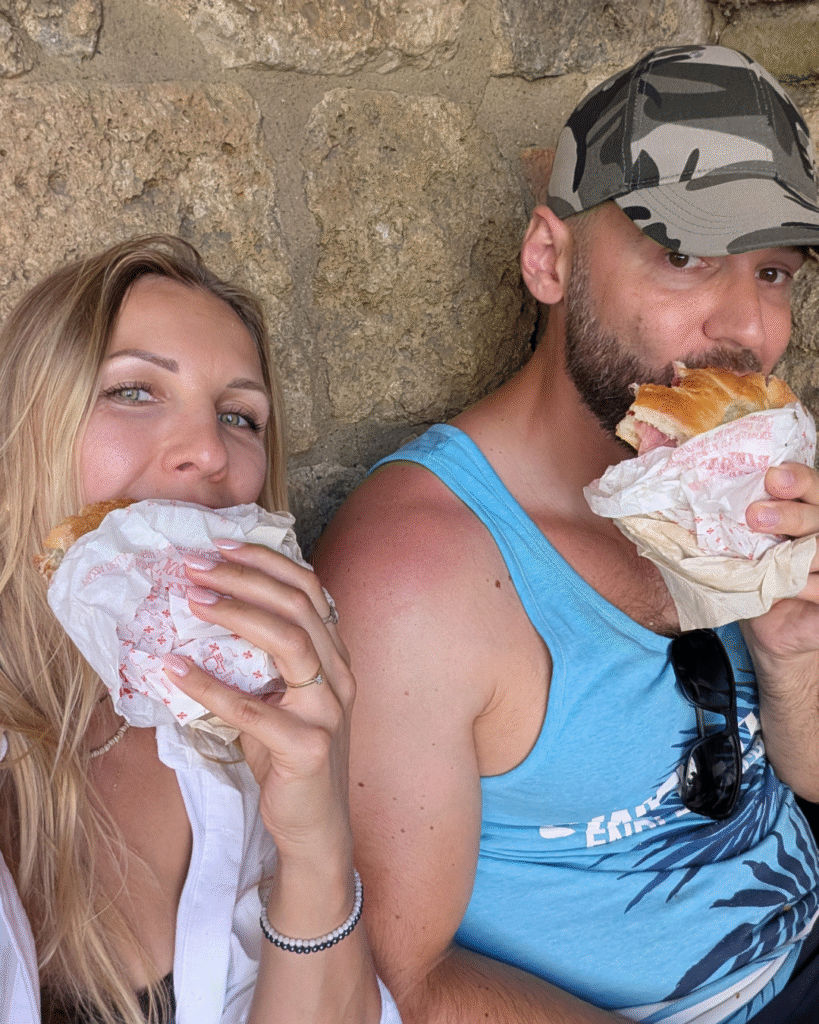
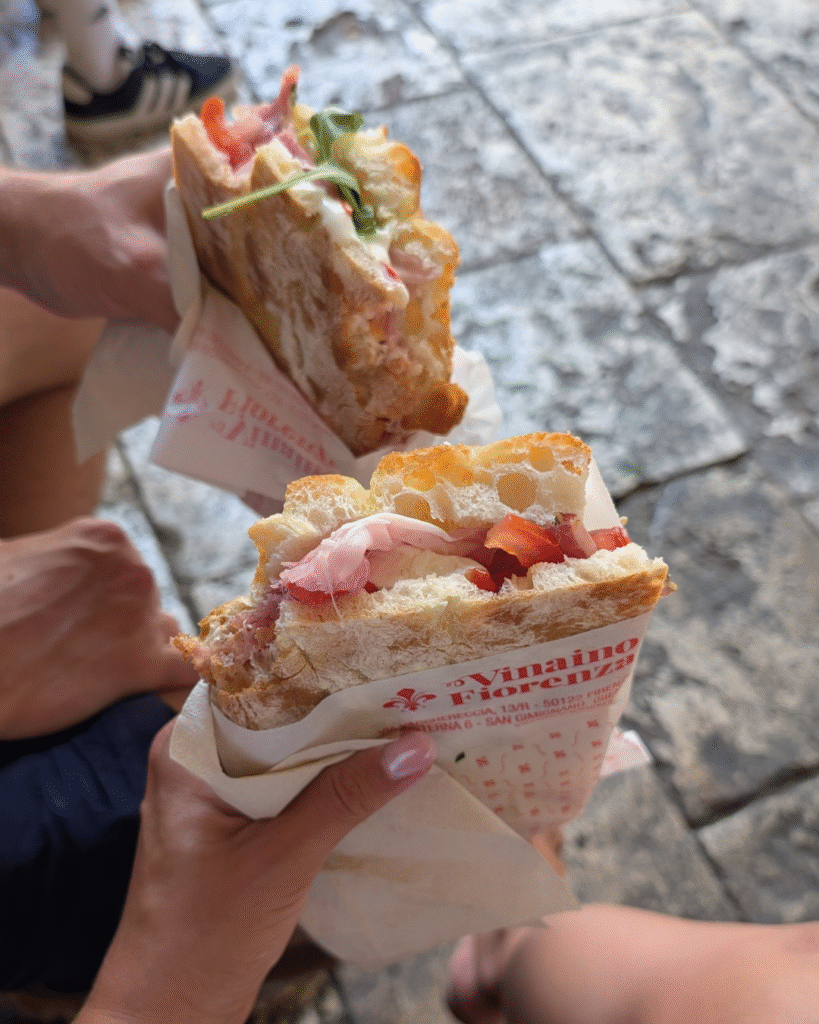
Schiacciata is flat, chewy bread baked with a lot of olive oil and not much else. We picked up ours at Vinaino Fiorenza in San Gimignano. Mine had dry-cured ham, mozzarella, tomato, and basil oil. My fiancée’s had rocket and stracchino.
There’s also a sweet version during grape season—Schiacciata all’Uva—made with black grapes, sugar, and a hint of anise. Either way, it’s good.
This bread started as a baker’s snack. Now it’s a daily staple, sold warm, wrapped in paper, and eaten on the go. No plate needed.
Other Local Must-Eats
Telline e Arselle
Tiny clams. Big flavour.
These mini shellfish are sautéed with garlic, parsley, white wine, and olive oil. Maybe served as-is. Maybe tossed with spaghetti. Either way, they taste like the ocean—in the best way.
Locals gather them at low tide. It’s seasonal, hands-on, and deeply rooted. Not flashy. Just honest.
Torta di Ceci
Four ingredients: chickpea flour, water, olive oil, salt. That’s it. This pancake is crisp on the outside, soft in the middle, and way more flavourful than it should be.
Called cecina in Tuscany or farinata in Liguria, it was originally baked on boats or in giant copper pans. In Livorno, it’s eaten inside bread—“cinque e cinque”—like a flatbread sandwich.
It’s plant-based, protein-rich, and accidentally cool.
Spaghetti allo Scoglio
“Spaghetti of the rocks,” and that’s exactly what it is—shellfish gathered by the seaside turned into pasta gold.
Garlicky tomato sauce, a splash of white wine, and a pile of mussels, clams, squid, and prawns. No cream. No drama. Just the sea, the sun, and carbs done right.
Pair it with chilled Vermentino and take your time. This dish doesn’t want to be rushed.
Where to Eat
Ristorante Il Moletto — Porto Santo Stefano
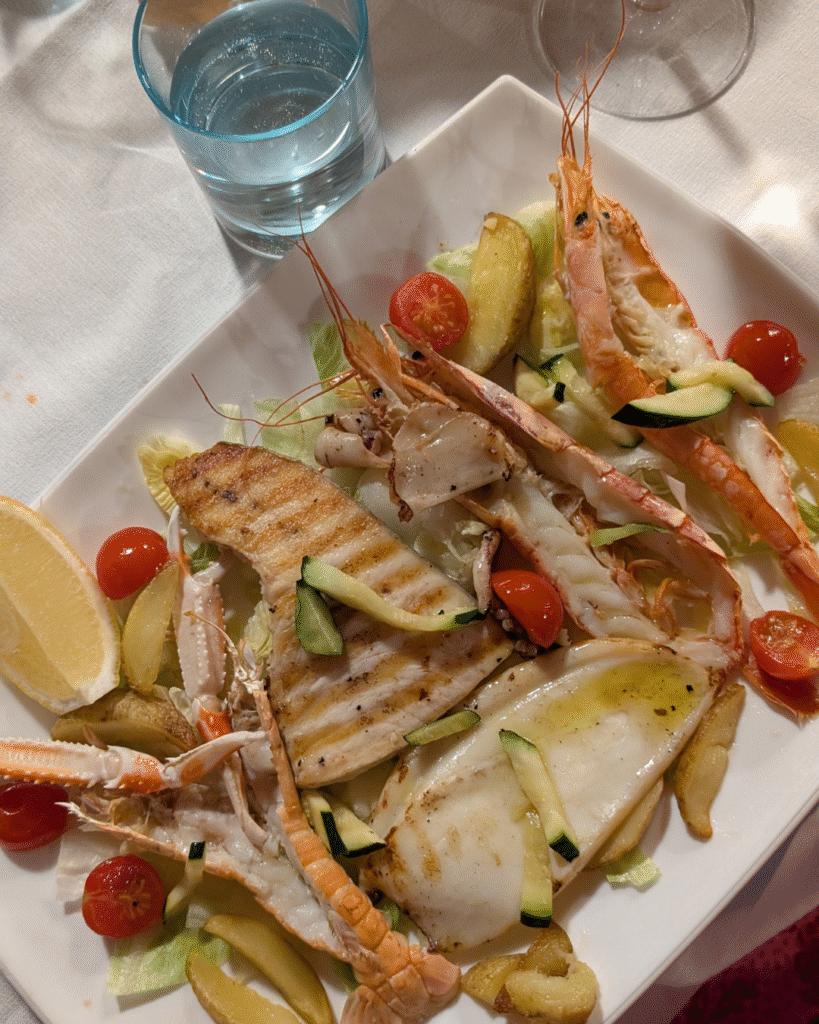
Ristorante Il Moletto is literally on the water. It’s been family-run since 1955 and still serves fish from the morning’s catch. Think spaghetti alle vongole, zuppa di pesce, grilled sea bass, fritto misto.
We went for a birthday dinner after a boat day—grilled catch of the day, rosé, and sunset over the harbour. Worth every kilometre.
Pro tip: book ahead in summer if you want that front-row sea view.
Fattoria Rossi Firenze — Florence
Right in Piazza dei Davanzati, Fattoria Rossi Firenze is farm-to-table done right. Everything comes from the Rossi family farm, established in 1868.
Rustic wood, hanging prosciutto, shelves stacked with pasta and cheese. We tried the Bordatino alla Pisana, Carbonara, and Ricotta Ravioli with sage butter. Clean plates all around.
It’s casual, intentional, and delicious.
Da Ciacco — Lucca
Post-villa-visit, pre-energy crash, we found this gem in sunny Piazza Napoleone. Da Ciacco is cheeky, full of locals, and excellent at sandwiches.
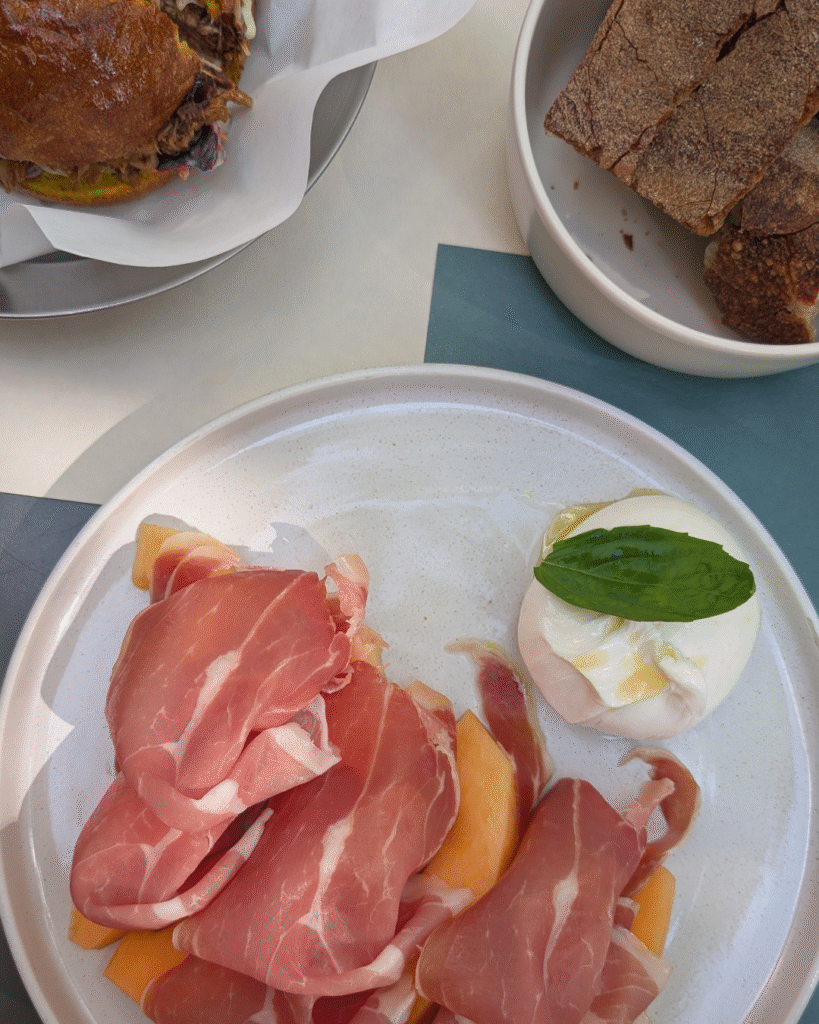
The bread has that golden hue—maybe cornmeal, maybe turmeric. Inside? Porchetta. Stracciatella and pistachio burrata. Mortadella. Roast beef. You name it.
Also: melon with prosciutto and burrata. Creamy, sweet, salty, light-but-filling. Get it.
Bringing Tuscany Home
Here’s what Tuscany taught me: good food doesn’t need a backstory. It just needs good ingredients, patience, and the guts not to overdo it.
This week, I’m cracking open Toscana in Cucina and attempting Polenta al Sugo Toscano—a recommendation from an Italian bookseller I barely understood. Fingers crossed.
Open a bottle of red. Tear up some schiacciata. Welcome to Tuscany.